
Most of what I share here starts with something happening in the world. This time, I get to share a world I’ve been building on the page.
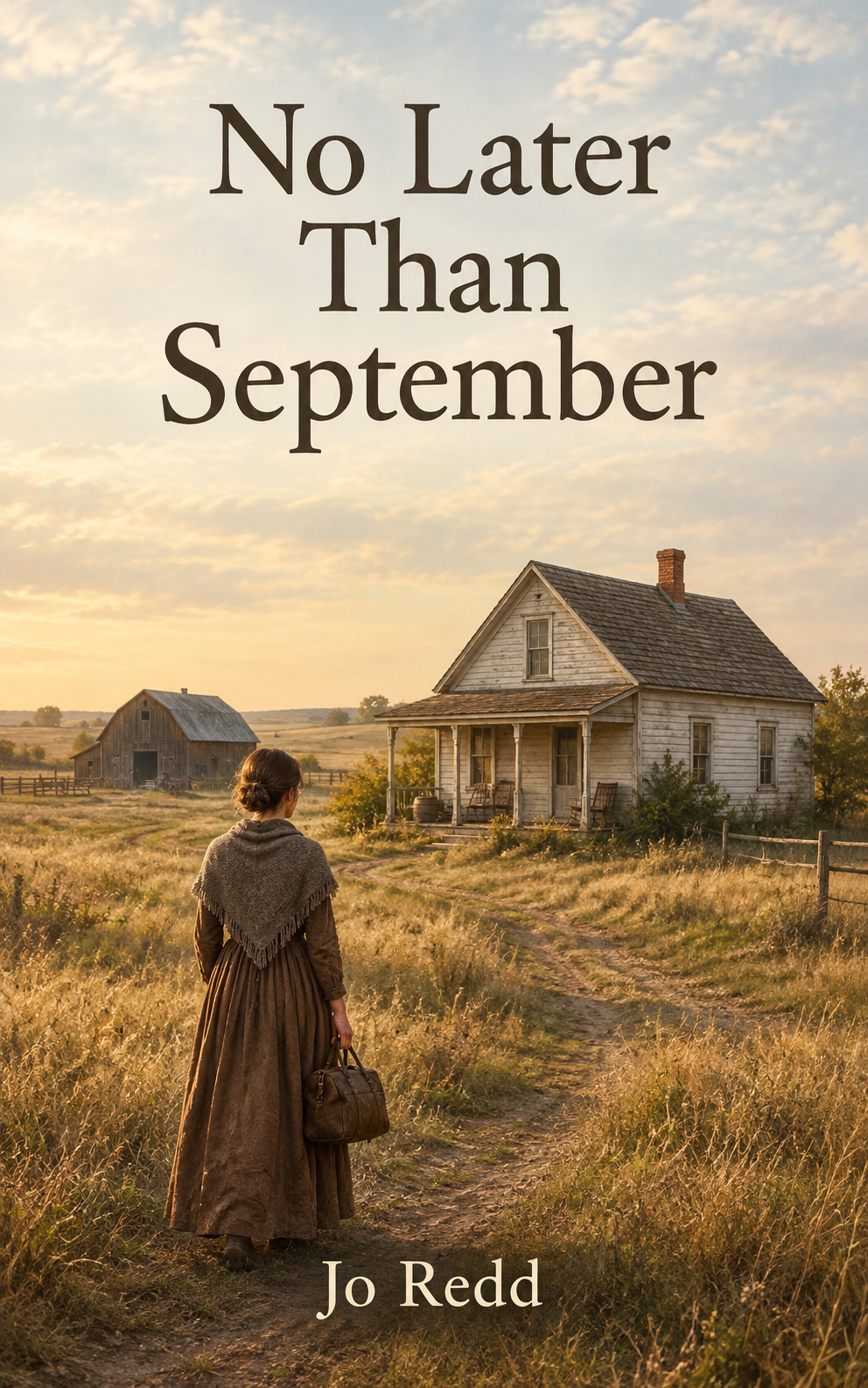
My new book, No Later Than September, is a historical fiction novel written under my pen name, Jo Redd. It’s the first book in The Iowa Years, and it begins near Clare, Iowa, in 1883—with a woman arriving for work, a household that needs her, and a promise about when she’ll be paid.
I’m excited to introduce you to the story and share a little of what went into bringing it to life.
Find No Later Than September on Amazon
Bringing Rural Iowa to the Page
Creating this novel meant thinking about a household from the inside out.
Who gets breakfast ready? Who notices when supplies are running low? Who cares for the children when someone is ill? And what happens when the person keeping everything moving needs something the household isn’t ready to give?
In No Later Than September, those everyday questions help drive the story.
The setting is rural Iowa in 1883, but the farmhouse is more than a backdrop. Its meals, chores, accounts, and unfinished work shape the characters’ choices. A trip into Clare means supplies to buy and money to account for. An expected payment from oats or hay can determine whether someone else gets paid.
Building that world meant making the practical details matter—not simply describing what life looked like, but showing how the business of getting through a day affects the people living it.
Meet Mara Bell
At the center of the novel is Mara Bell.
Mara needs work and enough money to keep her choices her own. The Hart household needs help just as urgently. Evelyn is recovering from illness, the children need care, and Samuel promises that Mara’s wages will be settled by the end of September.
Mara agrees to wait.
That agreement becomes more complicated as she settles into the household. The work is real. So is her growing concern for the people around her. But caring about a family does not erase her need to be paid.
Without giving away where her story leads, Mara’s position raises one of the book’s central questions: How much uncertainty can you carry for other people before it begins to cost you your own independence?
What the Title Means
No Later Than September takes its title from a promise about payment.
For the person making that promise, September offers breathing room. For the person waiting on it, September is a deadline she has built her own plans around.
That difference gives an ordinary agreement its weight.
The title connects the household’s financial troubles with something more personal: trust. What does a promise mean when someone else is depending on it? And what happens when asking someone to wait becomes easier than finding a way to keep your word?
Those questions run beneath the daily work of the Hart farm.
Writing About Women’s Work and Its Worth
One of the threads running through this novel is the work that becomes easy to overlook precisely because someone keeps doing it.
Meals appear. Children are cared for. The household carries on.
Behind those things is a person giving her time, attention, and labor.
Mara’s story brings that person into focus. It also leaves room for the difficulties of the people who depend on her. The household’s needs are not imaginary, and neither are hers.
That tension matters to the book. Compassion and fair treatment should not have to compete, yet the characters repeatedly find themselves making decisions as though there is only room for one.
There is gentleness and humor here, too. A household is never only its troubles. It is also the conversations, awkward moments, and small acts of care that make leaving—or staying—more complicated.
From Manuscript to The Iowa Years
Creating a book involves more than reaching the last page.
For No Later Than September, the work also included revisiting the manuscript, checking continuity, refining the setting, and preparing the story for its Kindle edition.
Each stage meant looking at the same book differently: first as a story taking shape, then as a connected whole, and finally as something a reader would open and experience for the first time.
Along the way, this novel became the beginning of The Iowa Years.
The series name gives these stories a shared home, while this first book begins on a personal scale—with Mara, the Hart household, and the question of what people owe one another.
Read No Later Than September
If you enjoy character-driven historical fiction, rural Iowa settings, and stories about women navigating work, obligation, and independence, I hope you’ll give No Later Than September a look.
Sharing it here is a chance to introduce a different part of my writing life—and to finally let readers step into the world on the other side of the cover.
Thank you for supporting my work, whether you’ve been reading the blog for years or this is your first visit.
—Jo Redd
Quick! Give your opinion